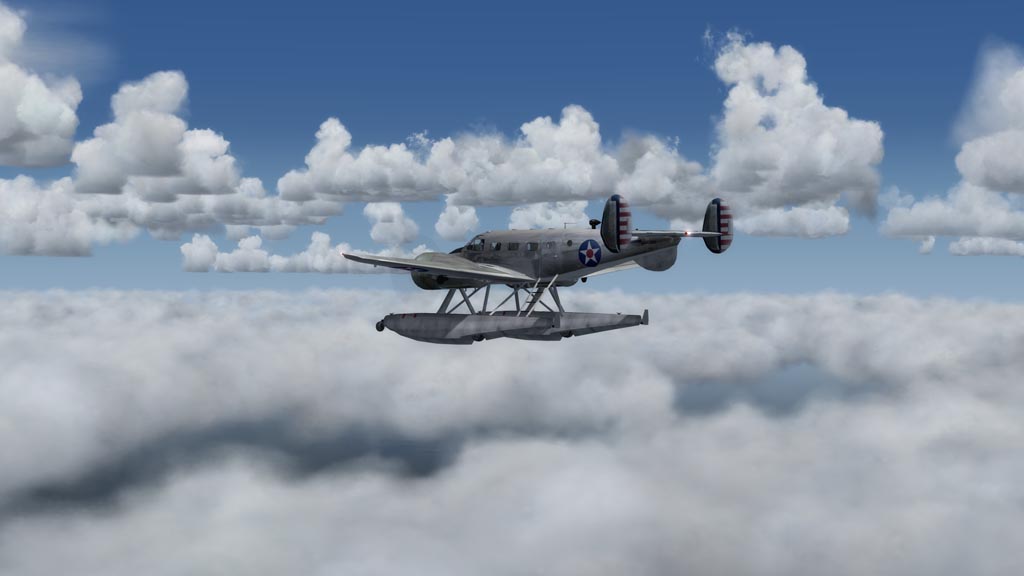
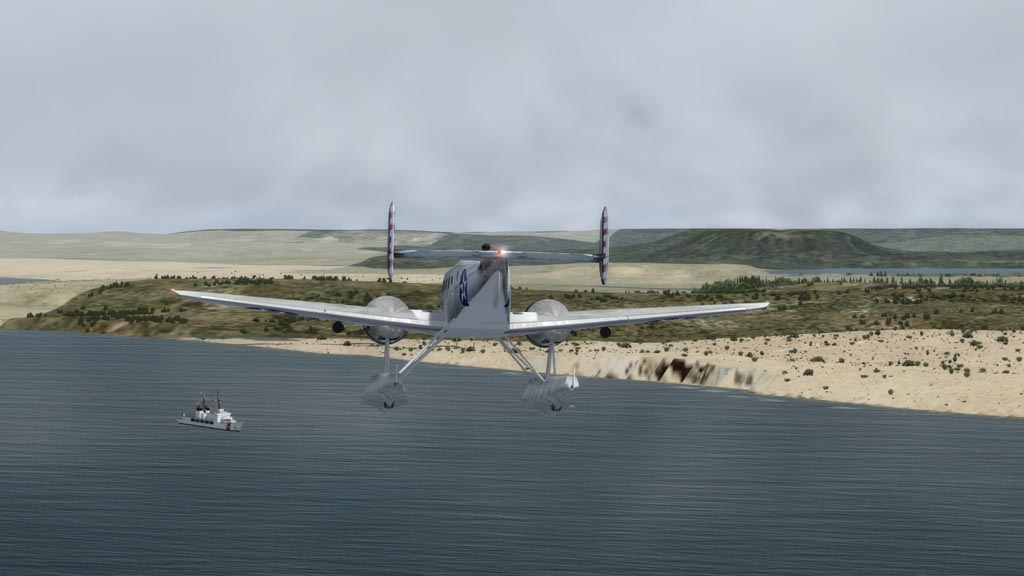
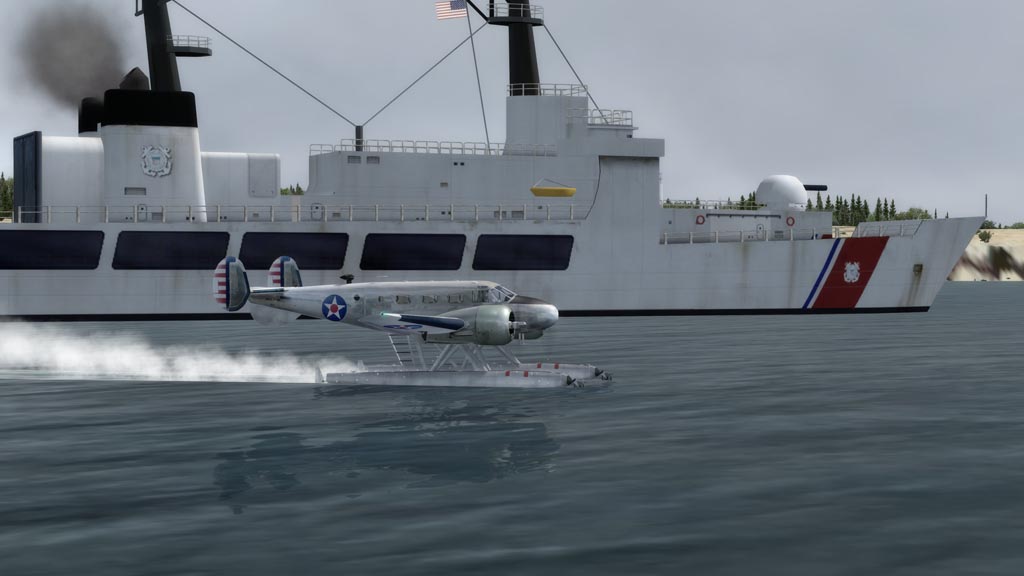
April 15, 1924: After 4 hours of flying Sargent Harvey yelled to Major Martin that the oil pressure gauge had dropped to zero and they immediately looked for a place to land, spotting a sheltered cove in Portage bay. As soon as they had slowed sufficiently Harvey leaped onto the pontoon to check the engine and found a three inch hole in the crank case. Martin and Harvey slept in the cockpits of the airplane, so sure assistance would arrive soon they did want to swim ashore, and at 5am the next morning the destroyers Corey and Hull arrived after steaming 312 miles to reach them. They were towed 10 miles to the village of Kanatak to await fuel, oil and a new engine being brought to them by the Coast Guard Cutter Algonquin.
April 19, 1924: At the same time Algonquin was heading to the disabled Seattle, Martin ordered Smith to proceed with the other aircraft to Dutch Harbor, where they had better facilities for taking care of the planes. A stiff wind was blowing as they untied there aircraft, along there flight to UnAlaska they flew around, over, under and through snow squalls, experienced the fierce Williwaw winds, flew over rocky islands, volcanoes and looked up at ice-capped mountains. After flying 390 miles in 7 hours and 26 minutes they landed in Dutch Harbor where the Coast Guard cutter Haida was waiting for them.
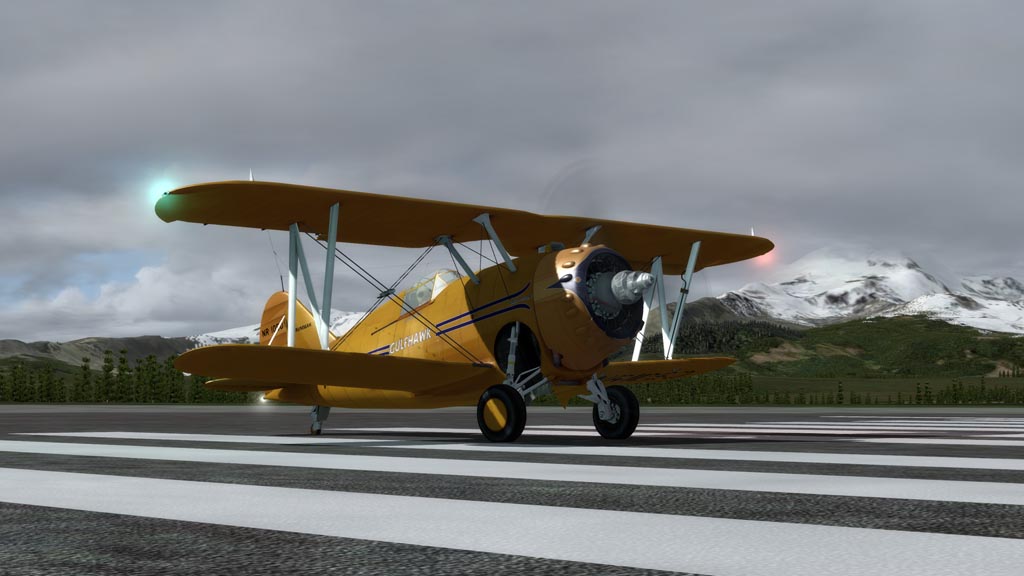
July 8, 2017: Today I got ready to fly the Heinkel He-51. The He-51 was a German single seat biplane figher that first flew in 1935 that was used by both the Luftwaffe and Spanish served as a fighter, seaplane, ground attack and trainer until 1952. Over 700 were built. The aircraft I am using today was by Craig Richardson and will be using a civilian repaint by Bernhard Lechner. The aircraft is very nice but it does tend to nose over if you apply the brakes to hard.
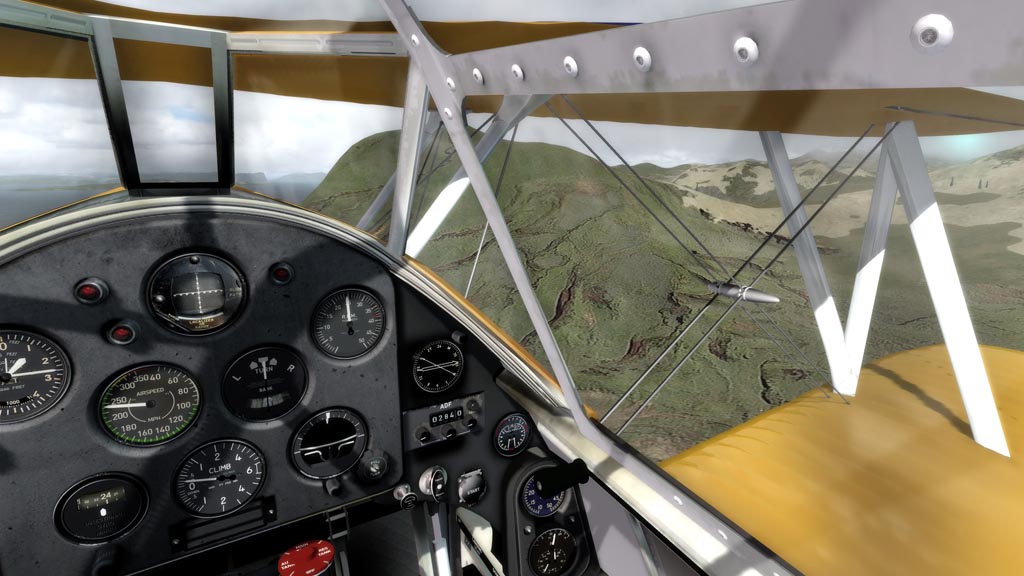
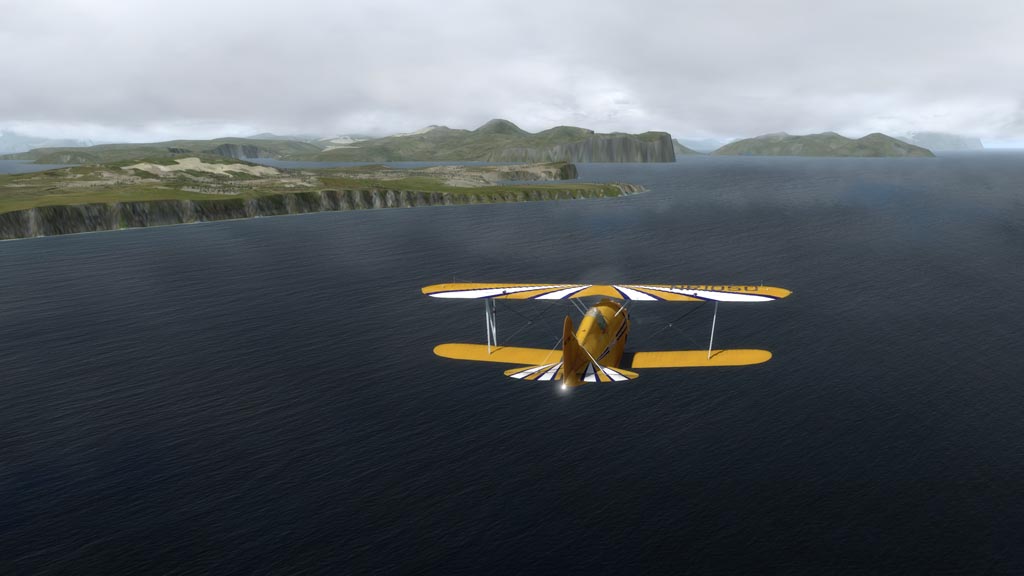
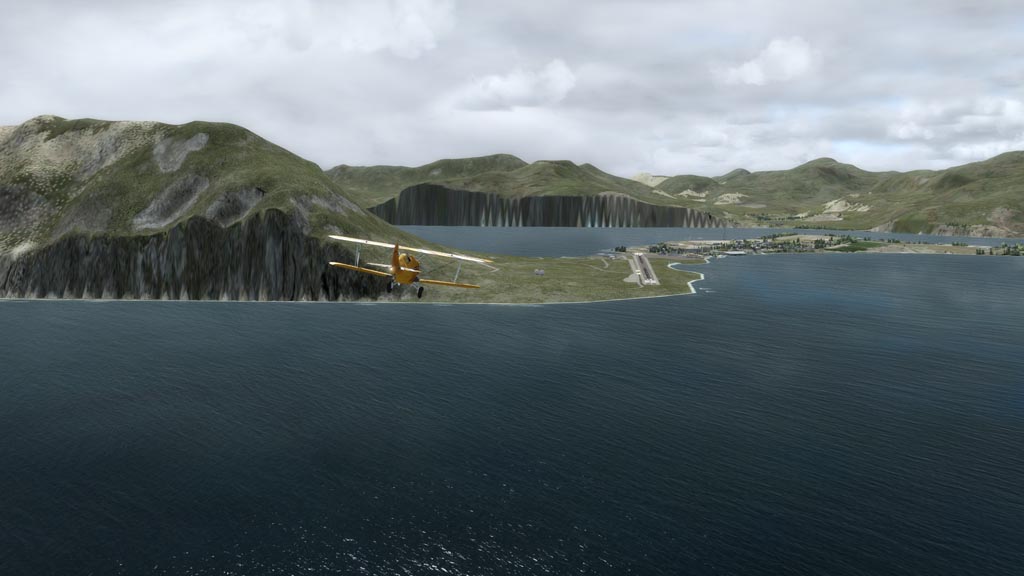
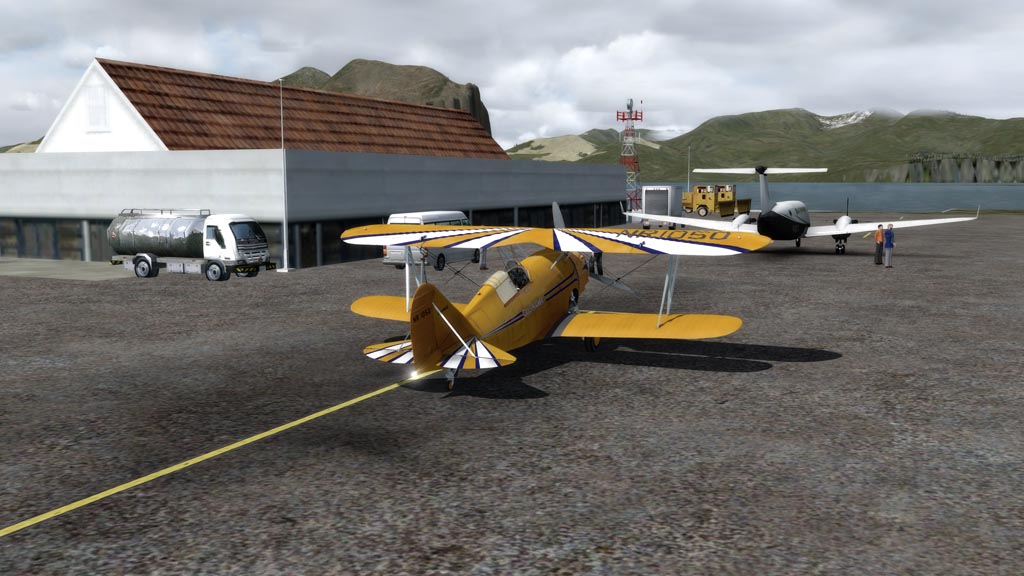
I decided to break this leg into two parts in the interest storytelling and using a couple smaller aircraft before the long oversea routes. My destination for this flight is Cold Bay, 161 nm away. The weather in Chignik for the start of the flight was great, 5 kn winds and clear. I climbed up over the low mountains and headed down the Alaskan peninsula at about 4000 ft. The weather got cloudier and windier as we flew on, eventually having to drop down to 1500 ft to stay below the clouds. I also became quite concerned about my fuel usage, the aircraft is supposed to have a range of 300 nm but when I reach 50% fuel I estimate I will get to my destination with very little fuel to spare. As I reach Cold Bay the winds have climbed to 31 kn and I had difficulty getting the biplane to settle on the runway especially since I was being very careful with the brakes not wanting it to nose over. Fortunately, Cold Bay airport has a very long runway and was able to make a safe stop with only 5% fuel remaining. Here are a few screen shots from the flight.
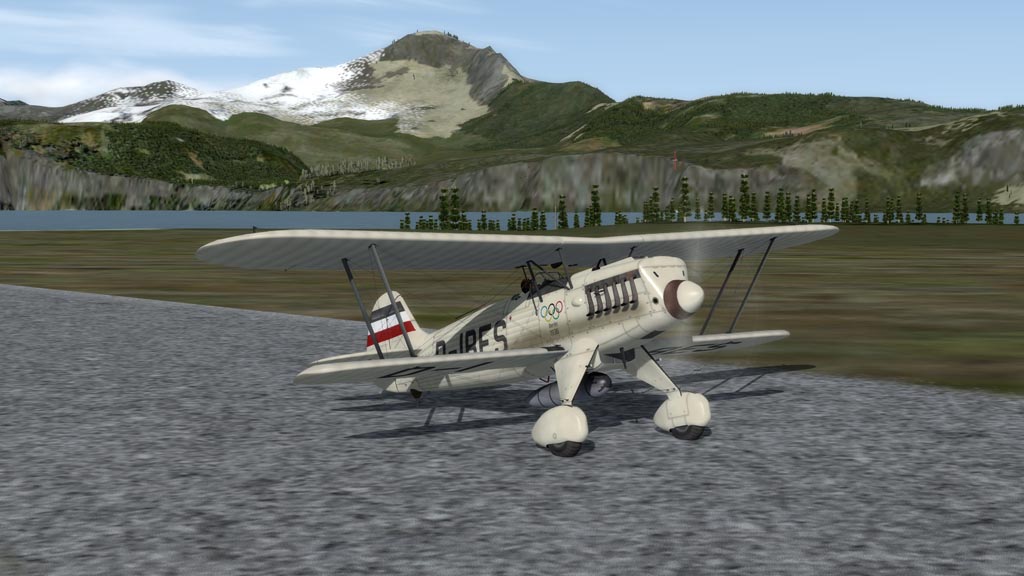
Ready for takeoff at Chignik.
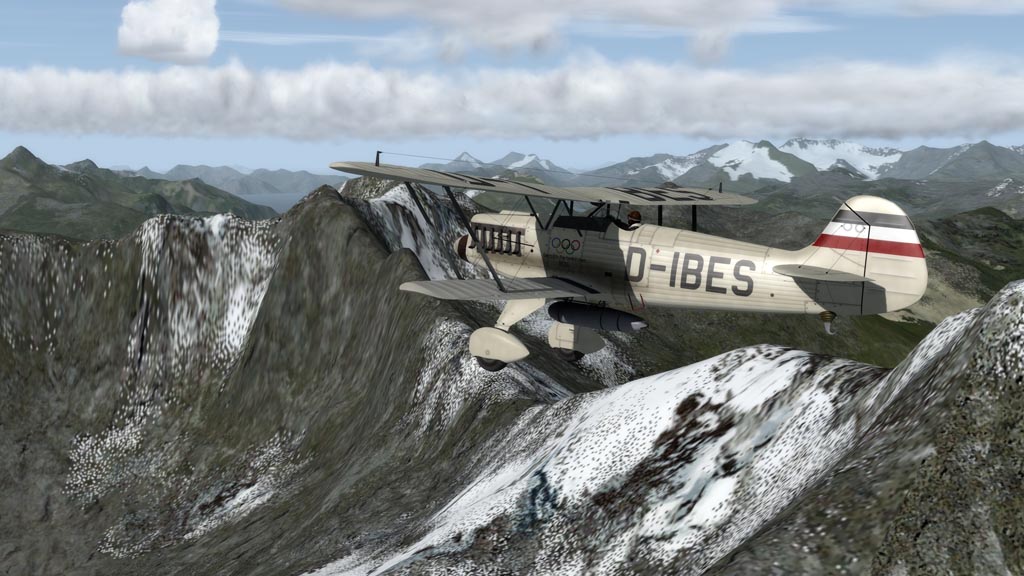
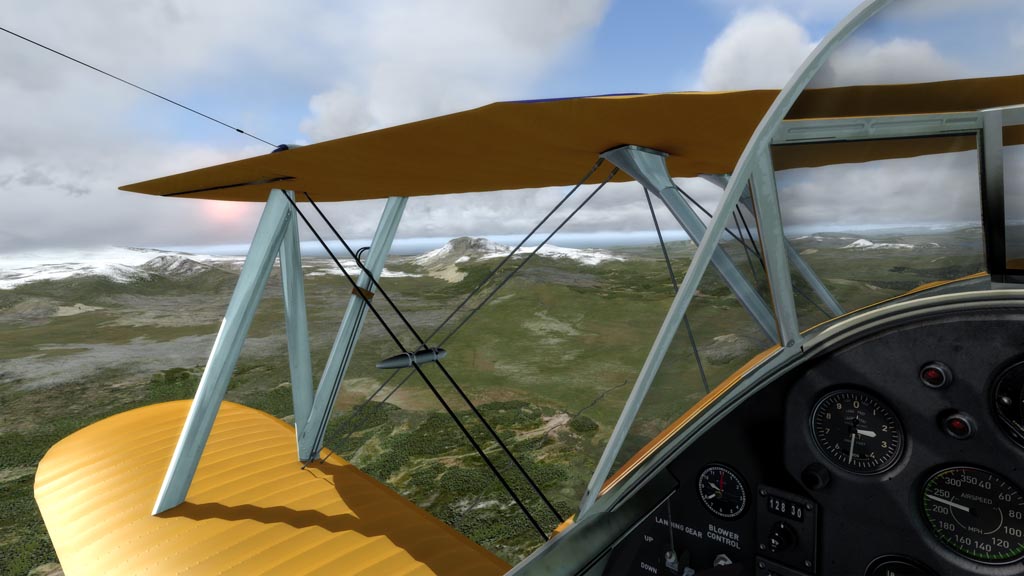
Heading out over the mountians.
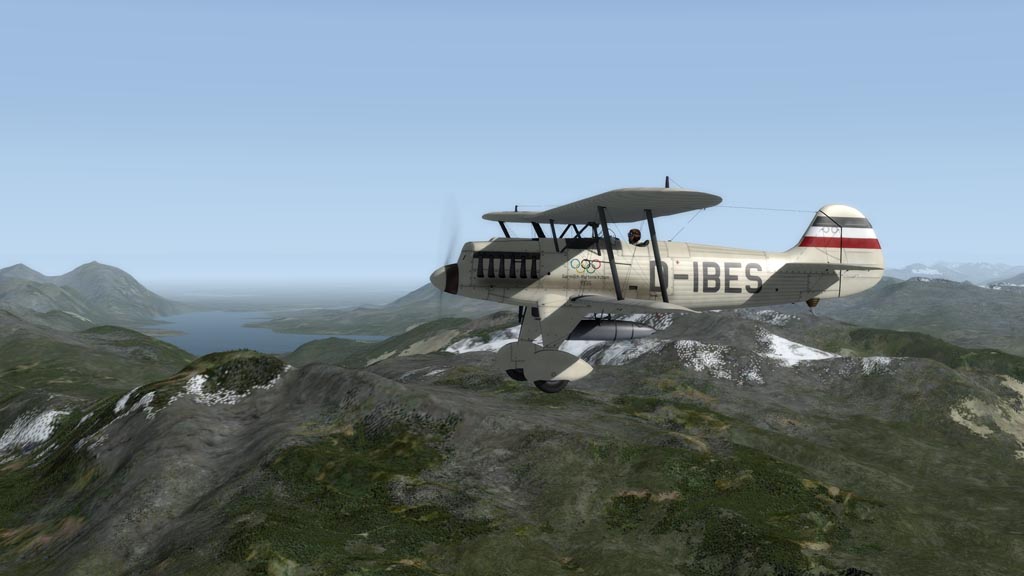
Beautiful flying weather, so far...
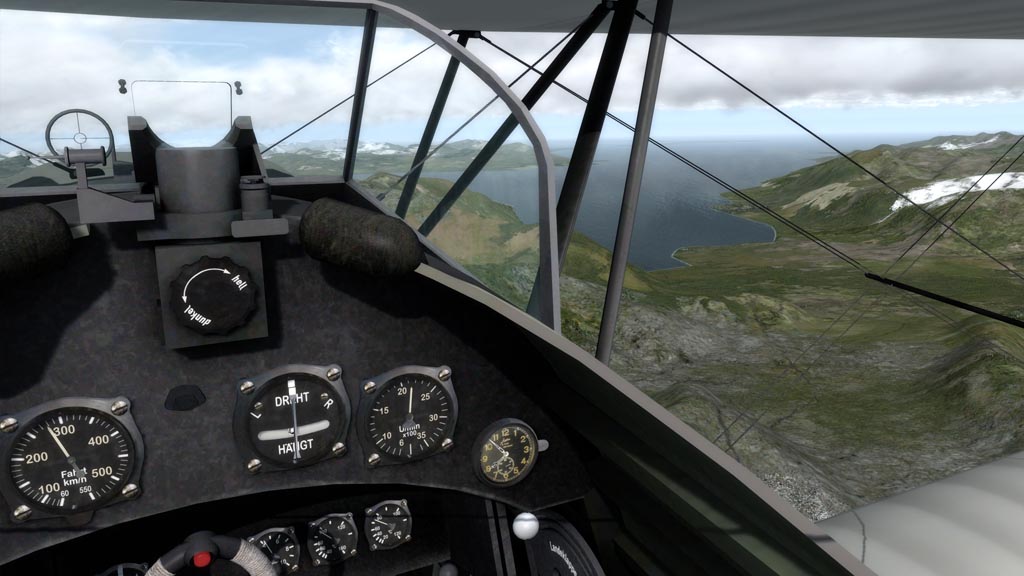
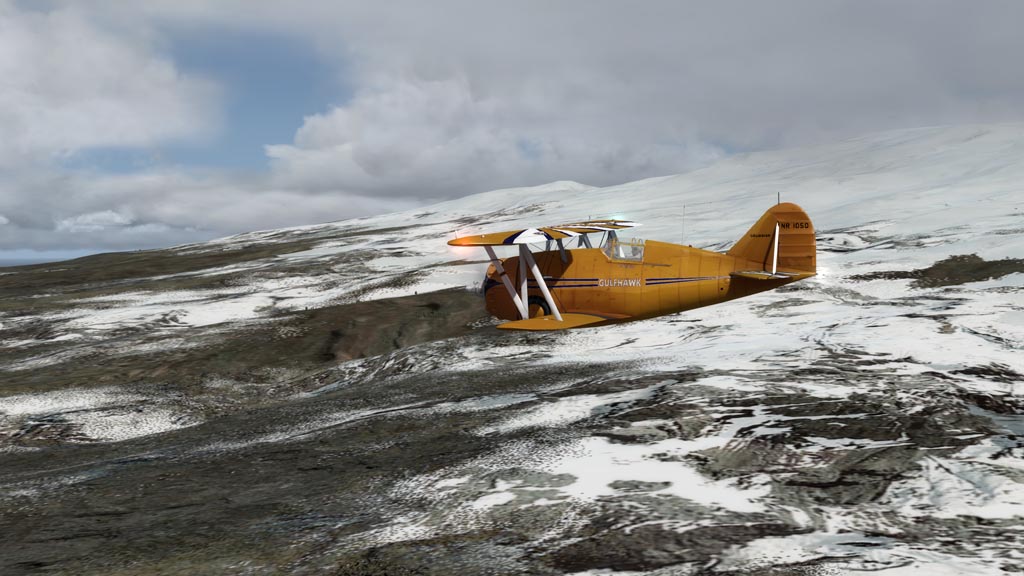
Flying down the Alaskan Peninsula.
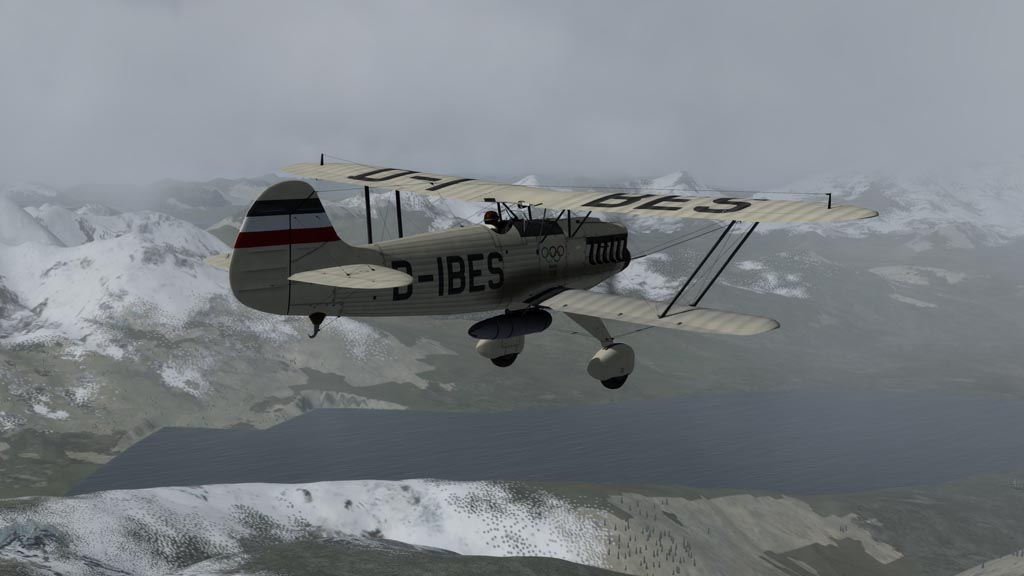
But the good weather did not last.
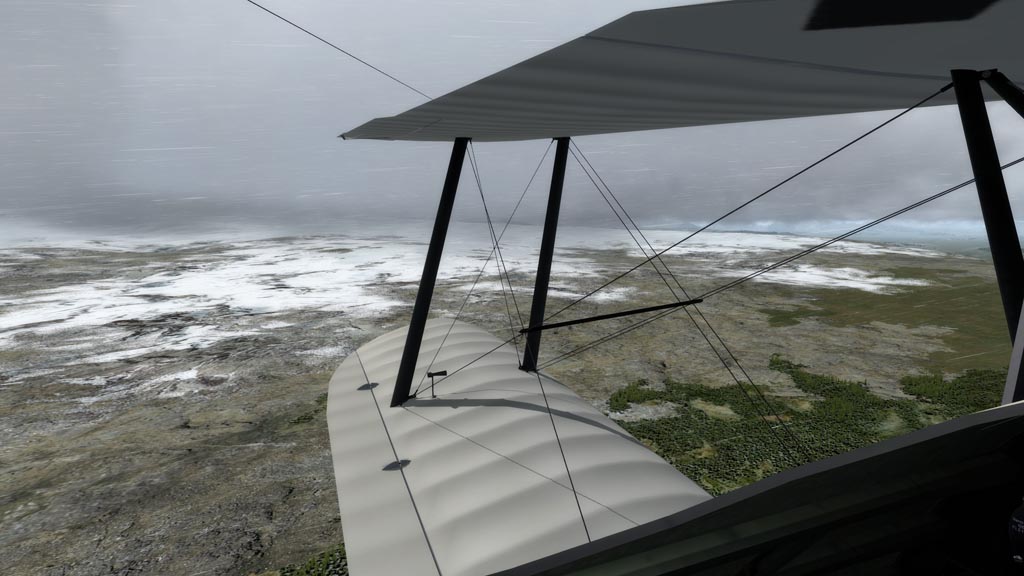
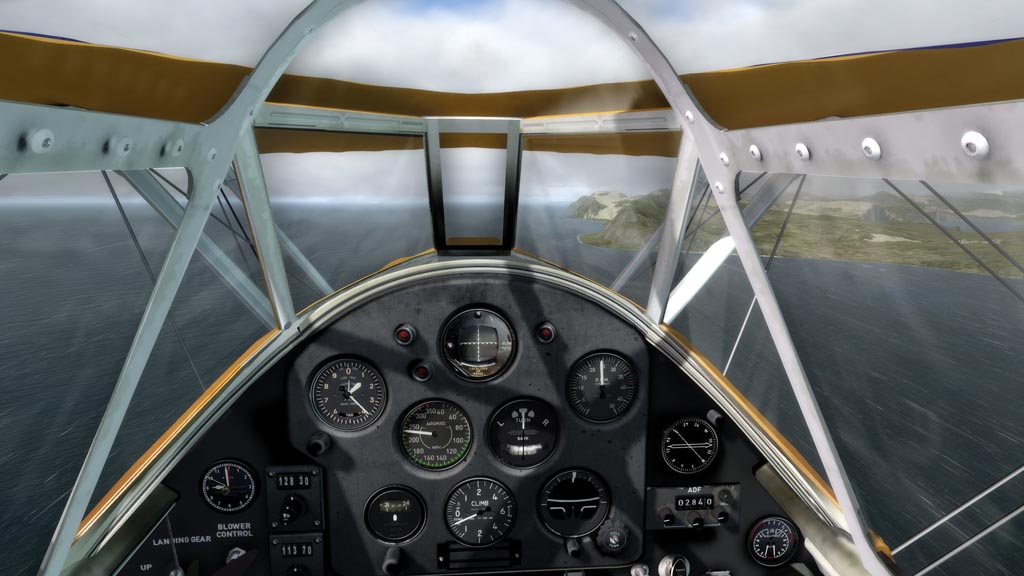
Flying low to stay under the clouds.
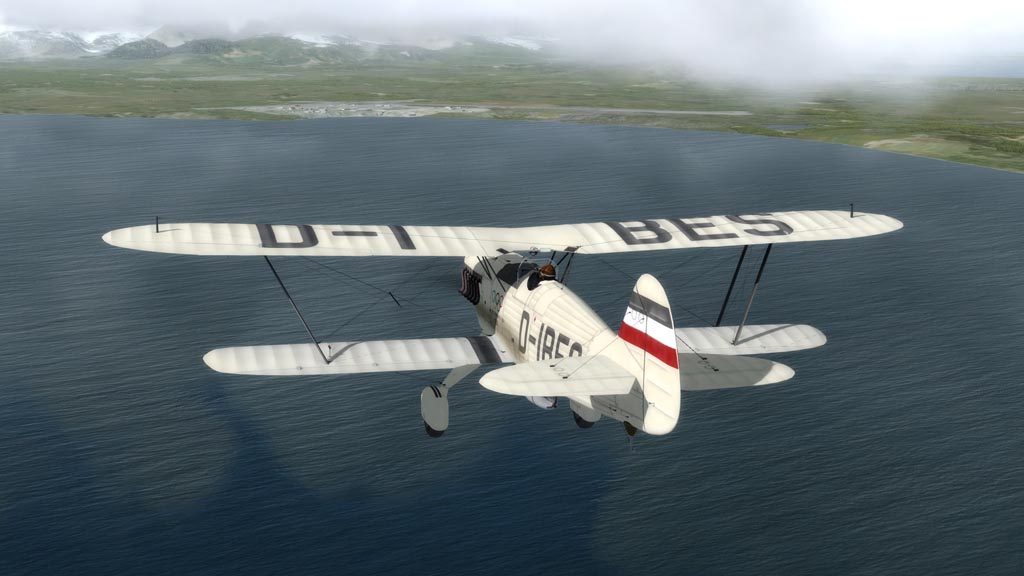
Cold Bay airport in sight.
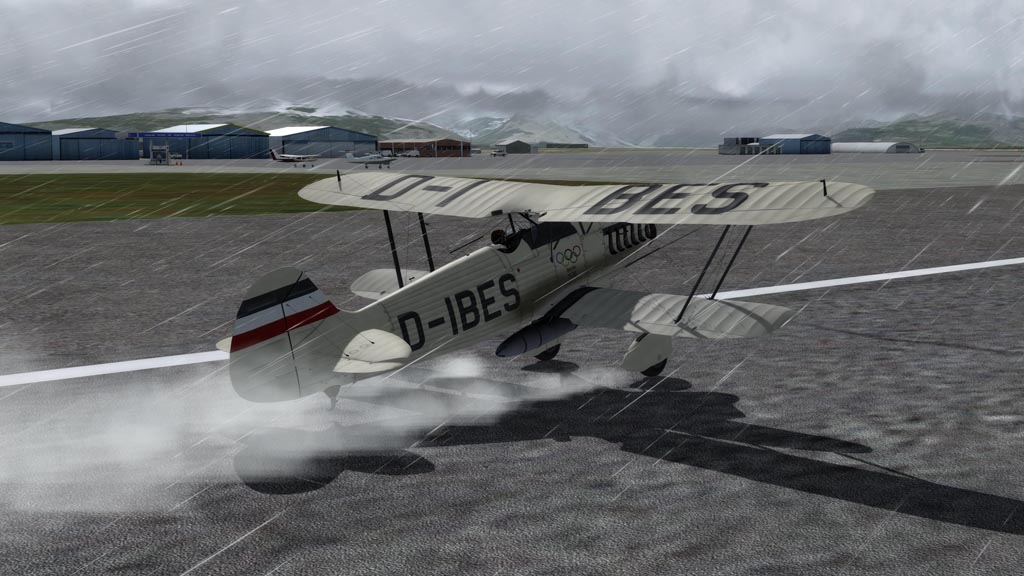
Landed in Cold Bay.
Sorry it took so long from the last flight, I out of town for the Holiday weekend and could not get much flying in until the next weekend.

 I'm thoroughly enjoying your trip